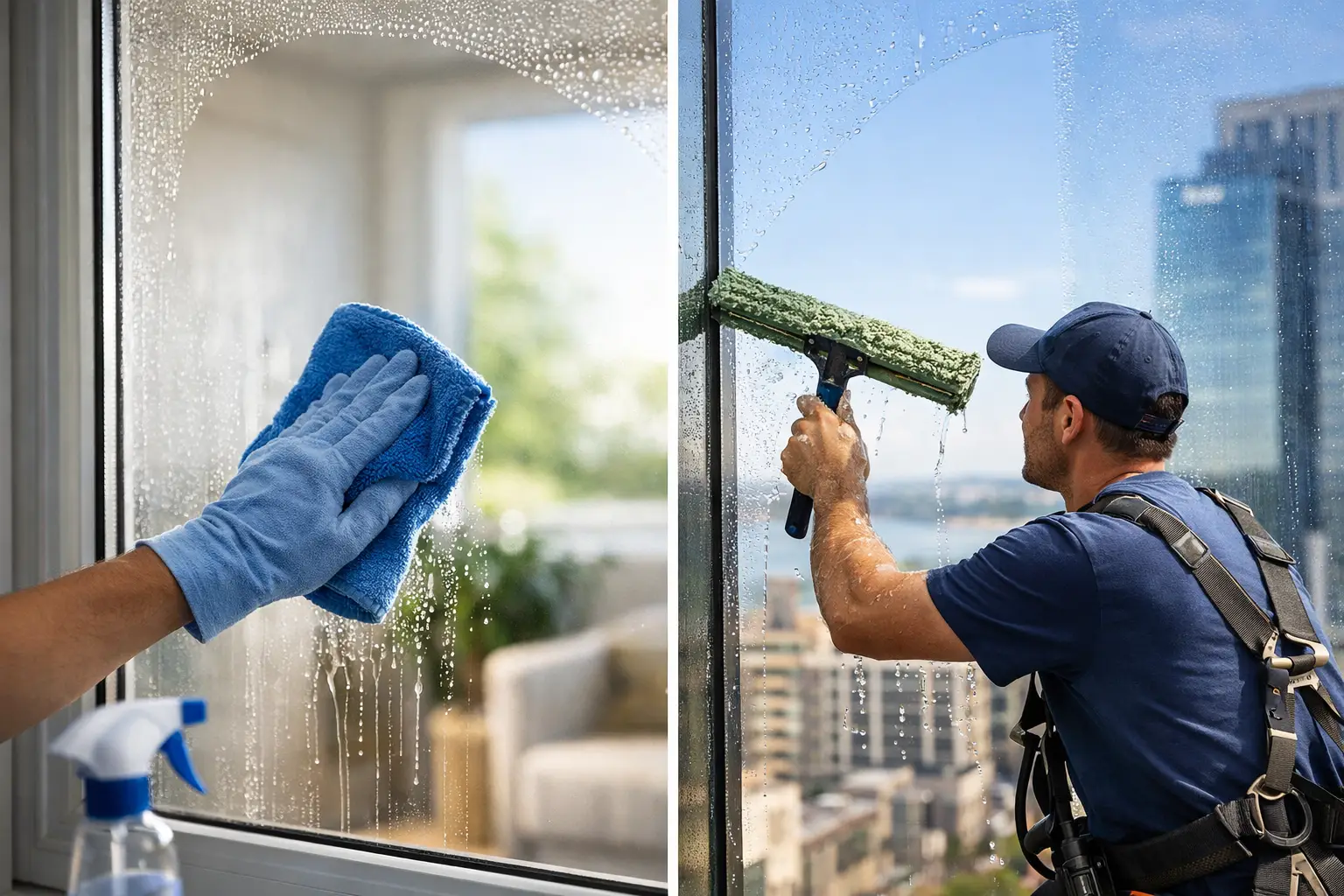
Second-story glass has a way of bothering you every time the sun hits it. What looks like a small job from the ground can turn risky fast once a ladder comes out. Safe cleaning for high windows is not just about getting a better view – it is about protecting your home, your time, and the people doing the work.
For many homeowners and property managers, the real challenge is not the dirt itself. It is height, awkward window placement, sloped ground, landscaping, and frames that need just as much care as the glass. That is where a careful approach matters. Clean windows should improve your property, not create a safety problem in the process.
Why safe cleaning for high windows matters
High windows collect more than dust. In Alabama, they often pick up pollen, spider webs, tree residue, water spots, and grime that bakes on in the heat. On commercial buildings and larger homes, upper panes also tend to be the ones that get put off the longest, which makes buildup harder to remove later.
The bigger issue is access. A second-story window above a flower bed, porch roof, AC unit, or uneven driveway is not a simple ladder job. Even if the glass looks close enough to reach, the angle may force overreaching, and that is where accidents happen. Many property owners underestimate how quickly a routine cleaning turns into a fall risk.
There is also the risk to the window itself. Using too much pressure, the wrong scrubber, or a harsh cleaner can damage seals, scratch glass, or leave spotting that looks worse than before. Safe work is not just about avoiding injury. It is also about protecting the finish and function of the window.
What makes high windows harder to clean safely
Some windows are hard because of height alone. Others are hard because the surrounding area works against you. Multi-story entryways, dormers, atrium glass, and windows above decks or steep landscaping all require a different setup than a straightforward exterior wall.
Weather plays a part too. Wind makes extension work less predictable. Afternoon heat causes cleaning solution to dry too quickly and leave streaks. Wet ground can make ladder footing unreliable. If you are dealing with oxidized frames, old screens, or brittle seals, the job becomes even less forgiving.
This is why experienced crews treat high-reach work like skilled labor, not a weekend task. The best result usually comes from combining the right equipment with the right judgment.
The safest way to approach high window cleaning
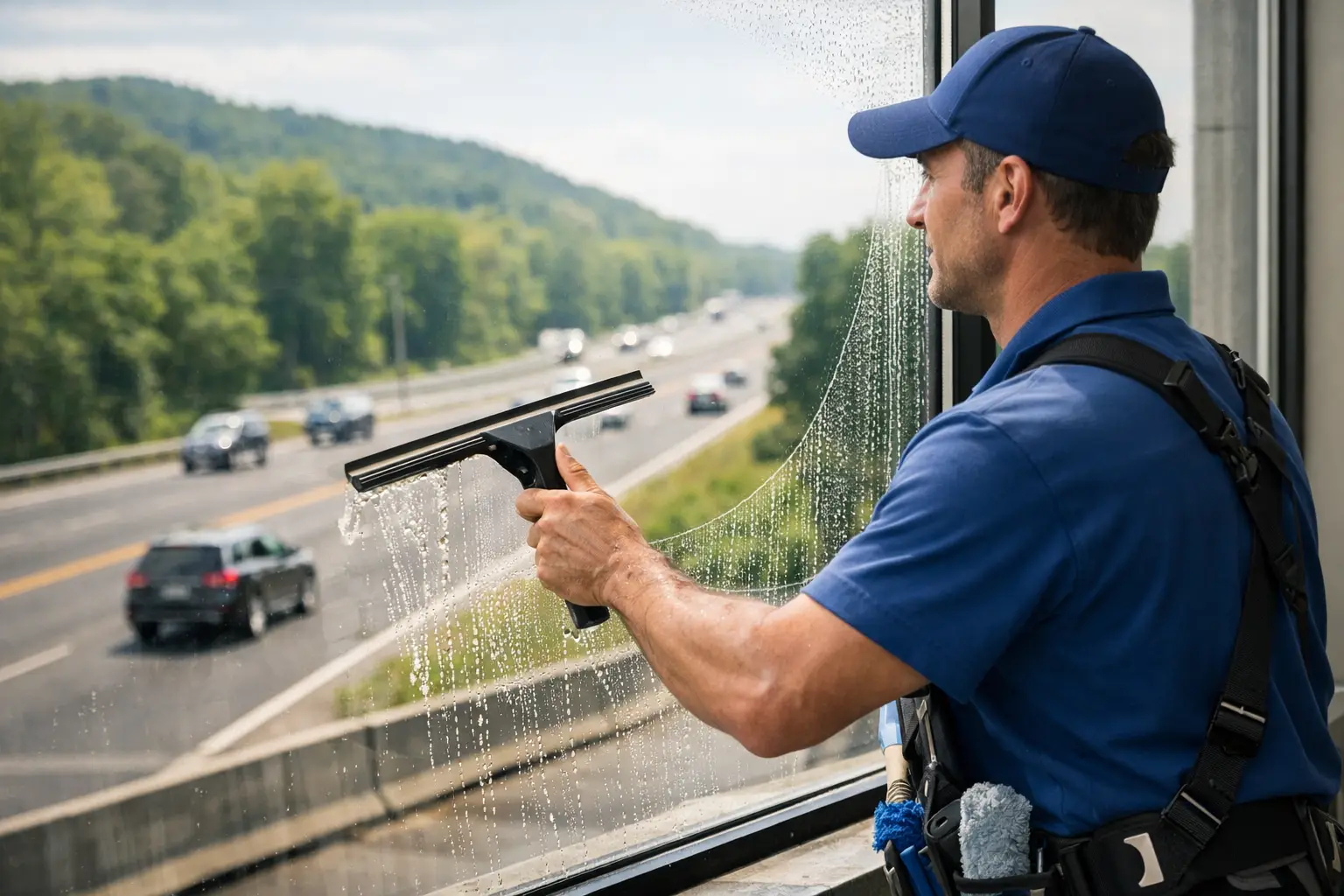
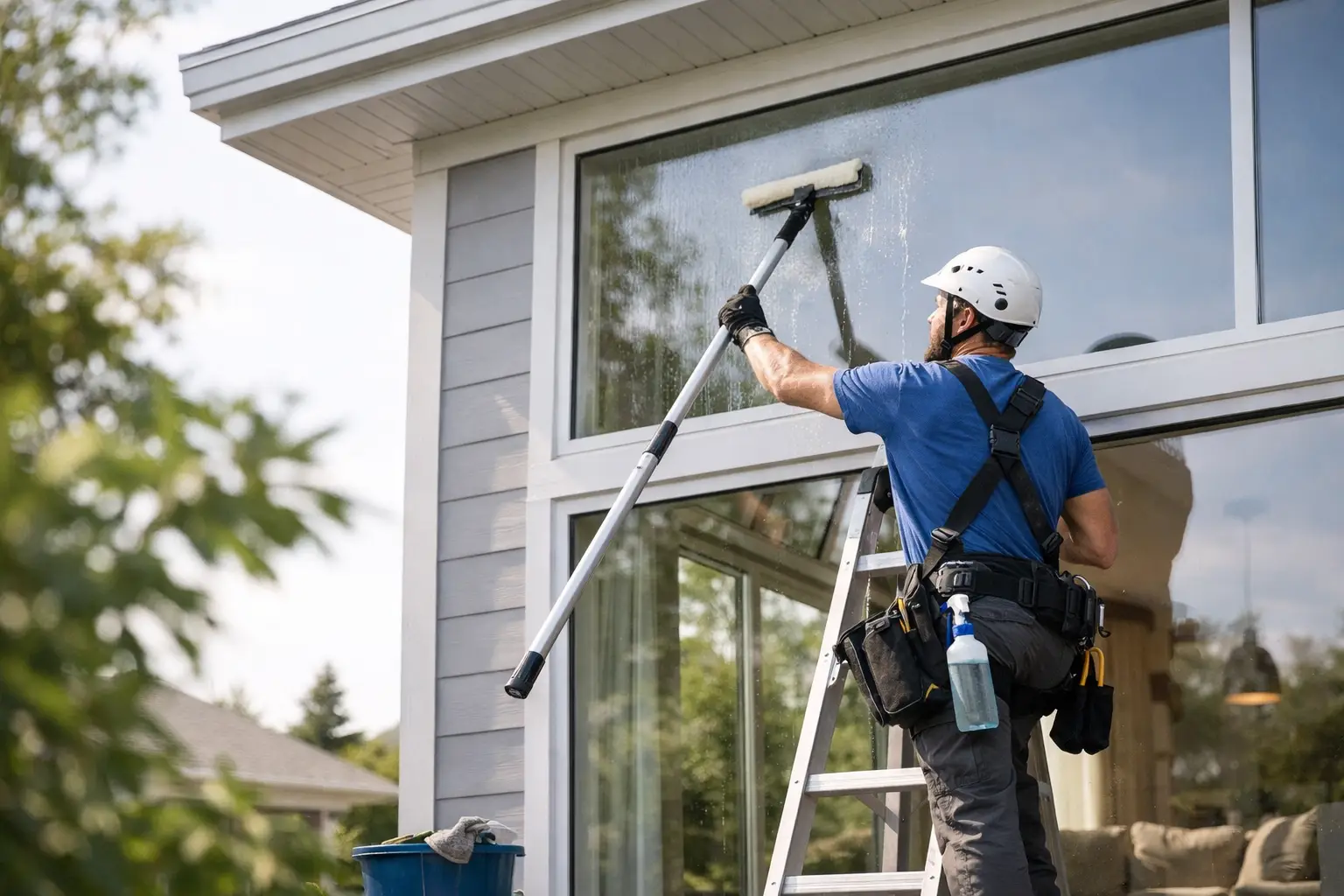
If you plan to clean upper windows yourself, the safest starting point is to avoid climbing whenever possible. Extension poles with professional-grade squeegee and scrubber attachments can handle many second-story windows from the ground. This reduces fall risk and usually gives you better control than trying to stretch from a ladder.
A basic garden hose rinse may remove loose debris, but it will not replace proper cleaning. In fact, hard water can leave mineral spots, especially in direct sun. A better method is to use a dedicated window cleaning solution with a washer sleeve on an extension pole, followed by a quality squeegee head designed for pole work. The glass should be cleaned top to bottom, with careful attention to edges where residue collects.
For windows with heavy buildup, you may need a second pass. That does not mean using more force. It means letting the cleaning solution loosen grime before scrubbing again with the proper pad. Aggressive tools and razor scraping should be handled carefully, especially on tempered or coated glass.
When ladders become the wrong choice
There are times when a ladder is appropriate, but there are also plenty of times when it is simply not worth the risk. If the ground is uneven, the window is above a roofline, or you have to lean sideways to reach the corners, that job has already crossed into unsafe territory.
The same goes for windows above hardscapes, shrubs, retaining walls, or slick surfaces. Homeowners often focus on whether they can get up the ladder. The better question is whether they can work steadily, keep three points of contact when needed, and get back down without rushing. If the answer is no, it is time to stop.
Professional crews use stabilizers, specialized ladders, water-fed systems, and job-specific safety procedures because high glass is rarely as simple as it appears. The goal is not just to reach the window. It is to clean it thoroughly without risking a fall, damaging the property, or leaving streaks behind.
Tools that help with safe cleaning for high windows
The right tools can make a major difference, but only when they match the conditions. Extension poles are often the safest option for reachable second-story glass. Water-fed poles can be especially useful on taller exterior windows because they allow cleaning from the ground using purified water that dries clear without as much detailing.
Good pole control matters. Cheap poles flex too much and make it harder to keep even pressure on the glass. Professional squeegees, scrubbers, and brushes hold up better and produce cleaner results. Microfiber detailing cloths are helpful around frames and sills, but they should be used sparingly on exterior upper glass where lint and overhandling can create more cleanup.
If screens are involved, they should be removed and cleaned separately whenever practical. Dirt trapped in screens and tracks often washes right back onto the glass. That is one reason a full-service window cleaning usually looks noticeably better than a quick exterior rinse.
Why technique matters as much as equipment
A lot of streaking problems come from technique, not from the window itself. Too much soap leaves residue. Too little water drags grit across the pane. Cleaning in direct midday sun causes solution to flash dry before the squeegee can remove it cleanly.
Frames and edges matter too. If upper sills are holding dirt, dead insects, or runoff stains, the glass may look clean for only a day or two before marks reappear. Skilled window cleaning includes the surrounding details because that is what keeps the finished result looking sharp.
This is especially important on homes and storefronts where appearance matters from the street. Clean upper glass improves curb appeal, brings in more natural light, and makes the whole property feel better maintained. Done properly, it is one of those services people notice right away.
When calling a professional is the smarter move
There is no prize for doing dangerous work yourself. If your windows are over a roof section, located on a steep lot, blocked by landscaping, or simply too high for confident ground-based cleaning, hiring a professional is the safer call.
That is often true for busy homeowners, commercial properties, and anyone trying to keep a home or business consistently presentable without spending half a day wrestling with equipment. A professional crew can usually clean high windows faster, more safely, and with better detail because the tools and process are already dialed in.
For property owners in Birmingham, Hoover, Vestavia Hills, Mountain Brook, Alabaster, and surrounding areas, working with an experienced local company also means the crew understands the region’s pollen, humidity, summer heat, and the way Southern weather affects glass, frames, and gutters over time. Companies like Squeeky Clean Windows Gutters & More do not just wash the pane and move on. They look at tracks, screens, surrounding buildup, and access conditions so the work holds up and the property is treated with care.
Clean windows should never come with a gamble
The best window cleaning plan is the one that keeps everyone safe and leaves the glass looking the way it should. Sometimes that means using an extension pole from the ground. Sometimes it means recognizing that a second-story job needs professional equipment and experienced hands.
If you are looking up at high windows and thinking, “That should be easy,” take one more minute and consider the setup, not just the dirt. A clear view is worth having, but not at the cost of a risky afternoon on a ladder.