Second-story glass has a way of looking simple from the ground and risky the moment a ladder comes out. That is why homeowners and property managers often search for how to clean exterior windows safely – not just how to make them shine, but how to avoid slips, broken screens, damaged frames, and the kind of rushed mistakes that turn a basic chore into a repair bill.
Clean exterior windows do more than improve the view. They brighten interior spaces, sharpen curb appeal, and help a property look cared for from the street. But safety has to come first. The best method depends on your window height, the condition of the glass, the landscaping around the home, and whether you can work from the ground. In many cases, the safest choice is not the cheapest or fastest one. It is the one that keeps both the glass and the person cleaning it in good shape.
How to clean exterior windows safely starts with access
Before you mix any solution or grab a squeegee, look at how you will actually reach the windows. Ground-level glass is straightforward. Upper-story windows, windows above shrubs, and windows over sloped ground are a different story.
If your windows tilt in for cleaning or can be reached with an extension pole from solid ground, that is usually the safest route. You avoid climbing, reduce the chance of a fall, and still get good results when the right tools are used. If a ladder is necessary, the setup matters more than the cleaning solution. Stable footing, correct ladder angle, and enough working room are what keep a simple task from becoming dangerous.
In Birmingham-area neighborhoods with uneven lawns, mulch beds, decorative stone, and dense foundation plantings, ladder safety gets even trickier. A ladder that feels steady on a driveway may shift in a soft flower bed or sit unevenly near edging. If you cannot place the ladder on a firm, level surface and keep three points of contact while moving, that is a sign the job may need professional equipment and training.
Choose tools that help you stay on the ground
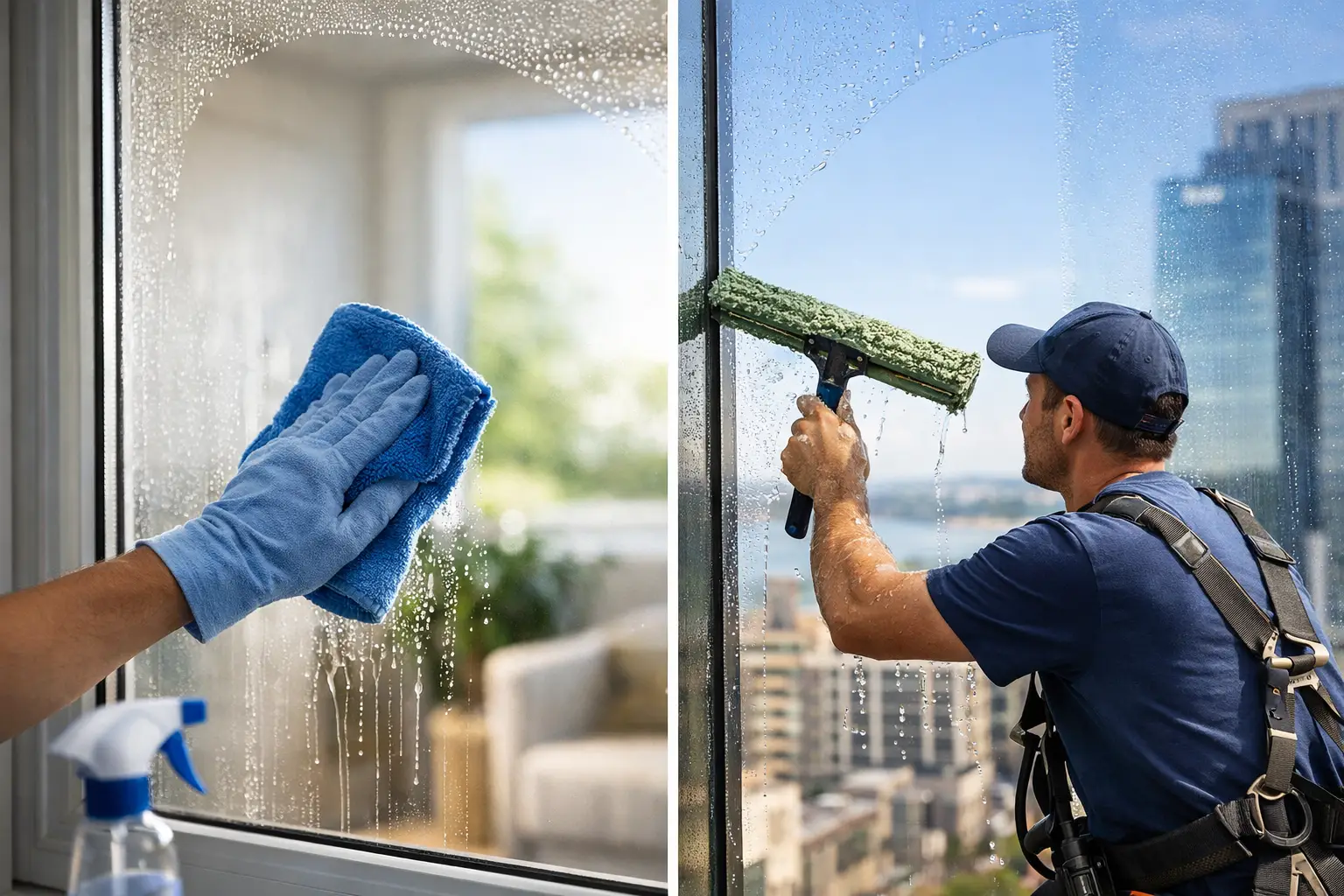
The safest window cleaning setup is often a simple one. A soft scrubber, a quality squeegee, a bucket, microfiber towels, and an extension pole can handle many exterior windows without ever climbing. A garden hose can help rinse loose dirt first, though high-pressure spray should be avoided around older seals, screens, and wood trim.
Cleaning solution does not need to be complicated. A small amount of dish soap in water works well for routine grime. The goal is to loosen dirt without leaving heavy residue behind. Stronger chemicals are not always better. Some can stain surrounding materials, affect painted trim, or leave films that make glass look worse in direct sun.
It also helps to think beyond the glass. Screens, tracks, frames, and sills hold dirt that can transfer right back onto freshly cleaned windows. If those areas are packed with debris, the finished result will not last long. That is one reason detailed window cleaning takes more care than people expect.
What to avoid when cleaning exterior glass
A few common shortcuts create unnecessary risk. Standing on the top steps of a ladder, leaning too far sideways, using abrasive pads, and cleaning in the hottest part of the day all lead to problems. Abrasive materials can scratch glass. Heat causes solution to dry too fast and leaves streaks. Overreaching on a ladder is one of the most common causes of falls.
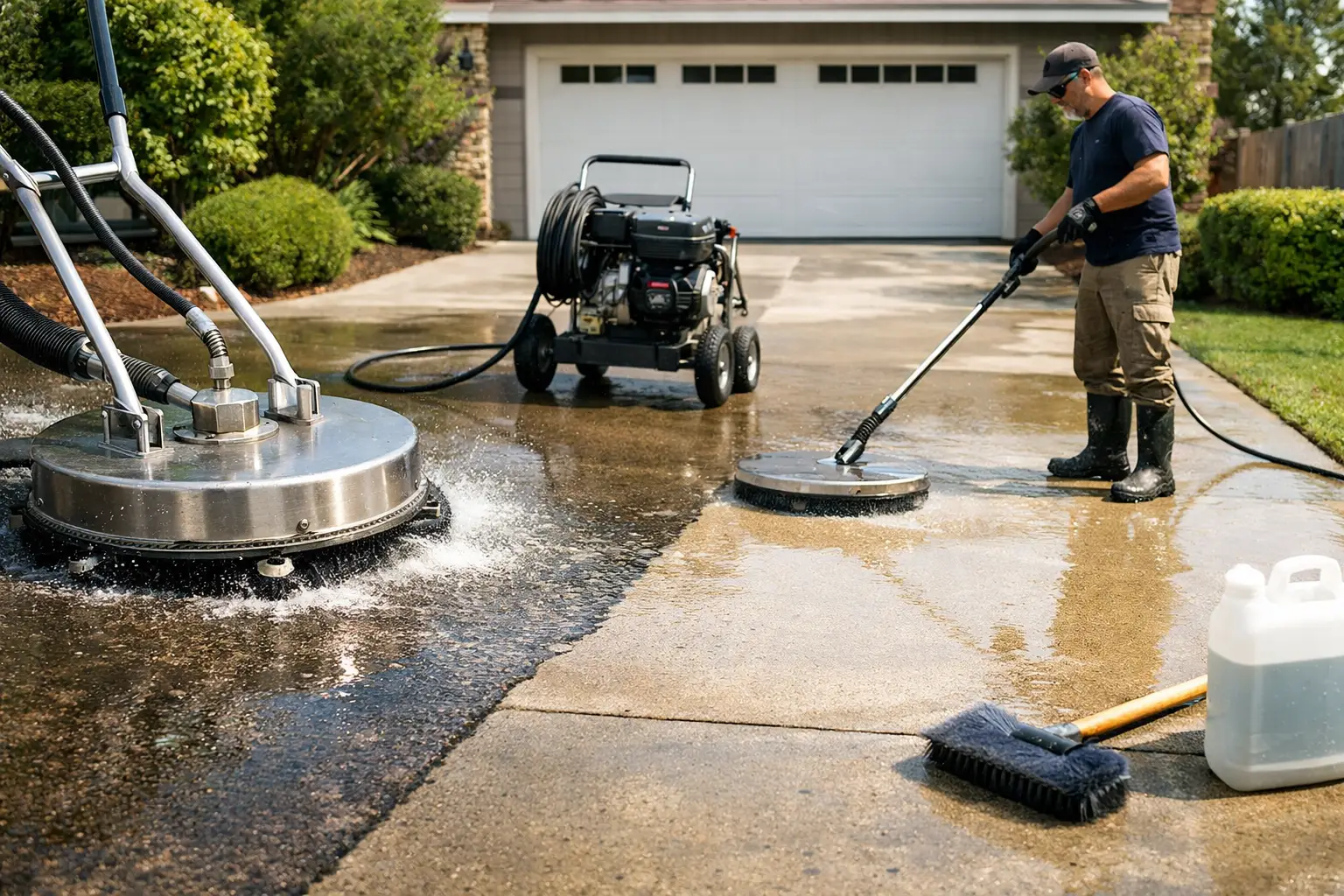
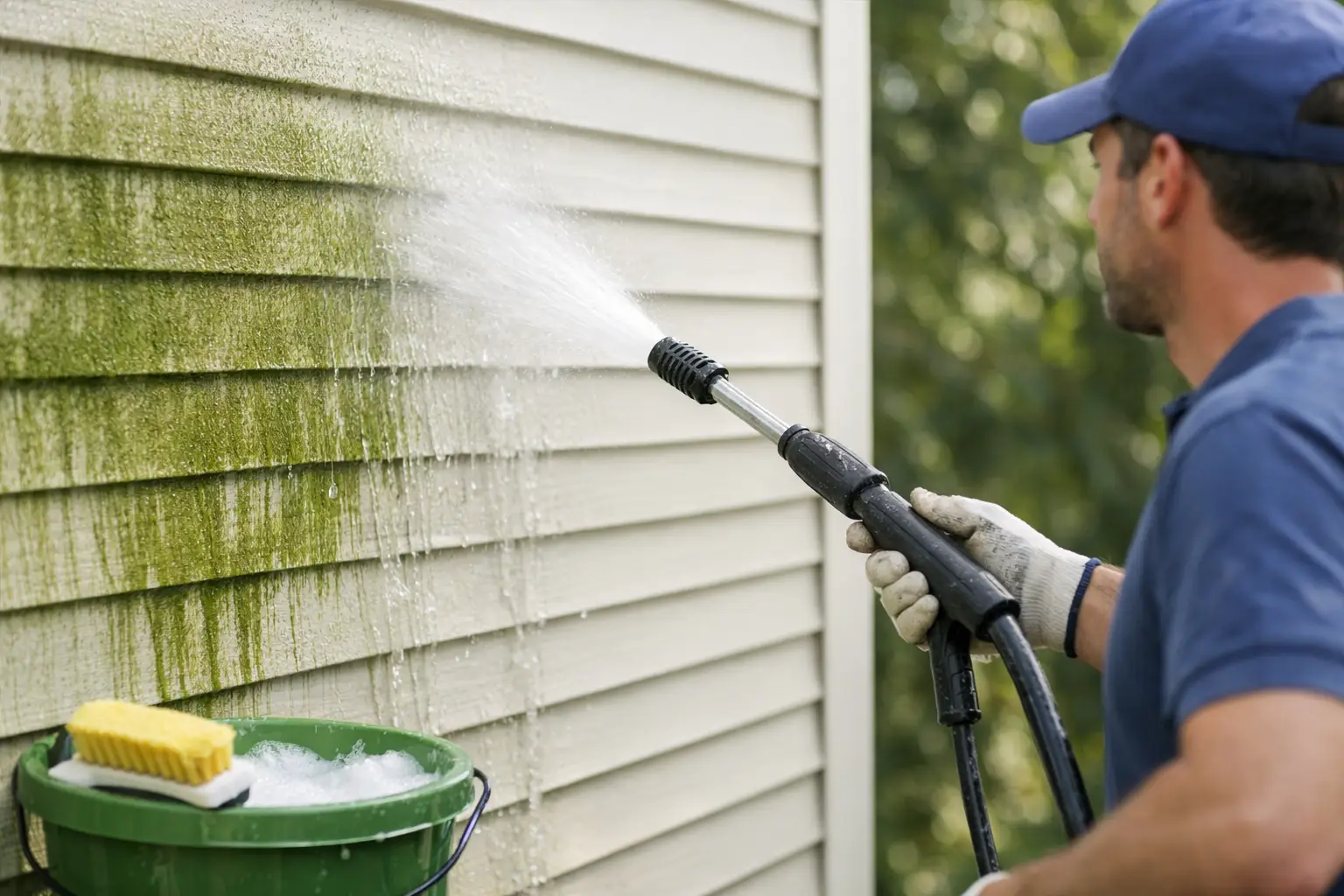
Pressure washers also deserve caution. They may seem like a fast answer for exterior cleaning, but they are rarely the right choice for windows. Too much force can damage seals, force water where it should not go, and even crack weakened glass.
A safer step-by-step approach for most homes
If your windows are reachable from the ground or from a short, stable ladder, the process can stay simple. Start by removing loose dust, cobwebs, and pollen from the frame and sill with a soft brush or dry cloth. This keeps muddy runoff from spreading once water hits the surface.
Next, wet the glass with your cleaning solution using a soft scrubber or applicator. Work one window at a time. Let the solution loosen grime for a moment, especially if there is pollen buildup, bird droppings, or sticky residue. Then use a squeegee from top to bottom or side to side in consistent passes, wiping the blade between strokes.
Finish by drying the edges with a microfiber towel. That final detail makes a big difference. Water left on the perimeter often drips later and creates marks that make an otherwise clean window look unfinished.
If screens are removable, take them out carefully and clean them separately with a gentle rinse and soft brush. Let them dry before reinstalling. Tracks and sills can be wiped out while the screens are off. That extra effort is part of what gives windows a cleaner, brighter appearance instead of just cleaner glass.
Ladder use is where safety usually breaks down
When people look up how to clean exterior windows safely, what they often need is honest guidance about ladders. The glass itself is not the dangerous part. The danger starts when someone climbs with a bucket in one hand, reaches beyond the side rails, or tries to clean second-story windows above landscaping that leaves no stable base.
A ladder should extend high enough to allow comfortable work without standing near the top. It should be set at the proper angle and secured when possible. Shoes need solid grip. Someone else should know you are working outside, especially if you are cleaning upper levels.
Even when all of that is true, ladders are still a trade-off. The higher you go, the less room there is for error. A homeowner may be able to safely clean one accessible upstairs window, but not an entire home with mixed elevations, awkward rooflines, or windows above hardscape. The smart decision is not always doing it yourself. Sometimes it is recognizing where the risk stops being reasonable.
Weather, glass type, and home condition all matter
Exterior window cleaning is not one-size-fits-all. Older homes may have aging wood trim, fragile glazing, or screens that bend easily. Newer homes may have large fixed panes that show every streak. Commercial storefront glass often needs a different rhythm and more frequent upkeep because fingerprints, road dust, and sprinkler spots build up fast.
Weather matters too. Wind makes ladder work less stable and blows dirt onto wet glass. Direct sun dries solution too quickly. After storms, debris and grit can act like sandpaper if rubbed across the surface. On homes near busy roads or heavy pollen zones, the windows may need more rinsing before any scrubbing begins.
That is why good results come from adjusting the method to the property. Safe cleaning is not just about avoiding falls. It is also about avoiding cracked seals, scratched panes, bent screens, and water intrusion around vulnerable trim.
When professional window cleaning makes more sense
There is no prize for doing a risky job yourself. If windows are high, hard to access, or blocked by landscaping, professional service is often the safer and more cost-effective option. The same goes for homes with a lot of divided panes, storm windows, oxidation on frames, or years of built-up grime.
A professional crew brings more than labor. They bring proper ladders, extension tools, stable methods, and the experience to spot trouble before damage happens. They also tend to clean the details homeowners skip when they are focused on just getting through the job.
For busy homeowners and businesses in Birmingham, Hoover, Vestavia Hills, Mountain Brook, Alabaster, and surrounding areas, that can mean better results in less time and with less risk. Companies like Squeeky Clean Windows Gutters & More also understand how local pollen, summer heat, and seasonal buildup affect exterior surfaces, which helps the clean last longer.
How often should exterior windows be cleaned?
Safety is easier to manage when windows are maintained regularly instead of left to collect layers of dirt. Most homes do well with exterior window cleaning at least twice a year. Some properties need more frequent service, especially if they sit near construction, trees, sprinkler overspray, or high-traffic roads.
Regular cleaning reduces the need for aggressive scrubbing and makes each visit simpler. That matters because the more force required to remove buildup, the more likely someone is to overreach, use the wrong tool, or damage the surface. Maintenance is not just about appearance. It is part of protecting the glass, frames, and overall presentation of the property.
The safest window cleaning job is the one planned with clear limits. If you can do it from the ground with the right tools, take your time and do it carefully. If height, access, or conditions make the work questionable, step back and let trained hands handle it. Clear glass should never come at the cost of your footing.