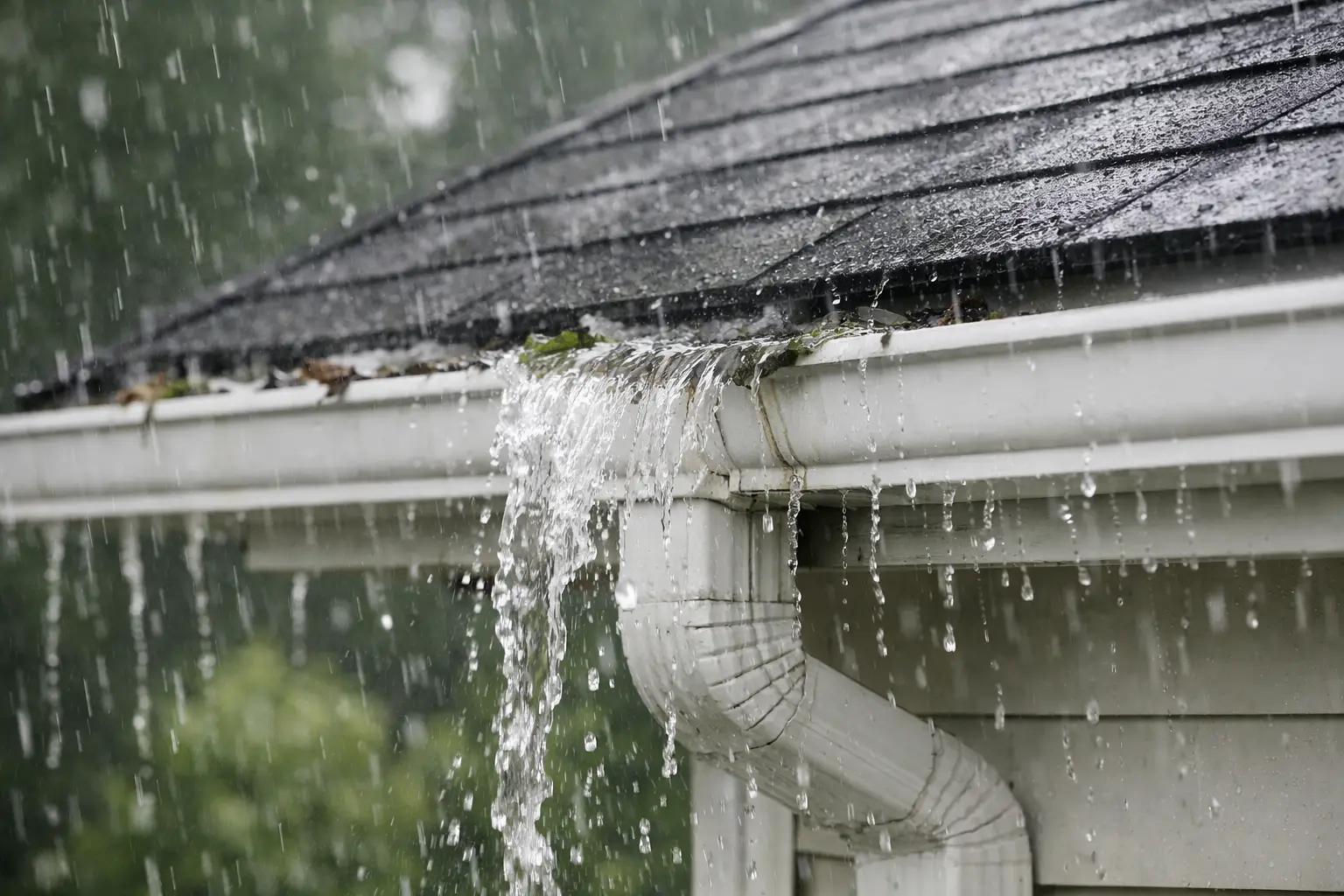
A gutter that spills over like a waterfall in the middle of a storm is not just messy – it is a warning sign. If you have ever stood at your front window and wondered why gutters overflow during rain, the answer is usually not one single problem. It is often a mix of buildup, poor drainage, bad pitch, or a system that simply cannot keep up with the roof above it.
In Alabama, heavy downpours can expose gutter problems fast. What looks fine on a dry day can fail the moment water starts moving off the roof in volume. That is why overflow should never be brushed off as normal.
Why gutters overflow during rain in the first place
Gutters are supposed to catch rainwater, move it to the downspouts, and carry it away from your foundation, siding, landscaping, and entryways. When water pours over the front or sides, something is interrupting that path.
Sometimes the issue is obvious, like leaves packed into the trough. Other times, the gutter may look clear from the ground but still be holding sludge, shingle grit, or a hidden clog in the downspout. In other cases, the gutter is technically clean, but it was installed with the wrong slope or it is too small for the roofline it serves.
That is the part many property owners miss. Overflow does not always mean dirty gutters. It can also mean the system is undersized, damaged, or struggling with the way water is being delivered into it.
The most common causes of gutter overflow
Clogged gutters
This is still the most common reason. Leaves, pine needles, twigs, seed pods, roof grit, and dirt create a dam inside the gutter channel. Once water hits that blockage, it has nowhere to go except over the edge.
In neighborhoods with mature trees, buildup can happen faster than most people expect. Even a partial clog can cause overflow during a hard rain because the water flow increases faster than the gutter can drain.
Blocked downspouts
A gutter can look clean on top and still overflow if the downspout is packed. Water may enter the gutter properly, then back up when it cannot exit. The result is standing water in the trough and spillover at the lowest point.
This often happens when debris washes to the outlet and compacts there. Sometimes the clog sits several feet down inside the downspout, where it is hard to spot without a proper inspection.
Improper gutter pitch
Gutters need a slight slope so water moves toward the downspouts. If they are level or pitched the wrong way, water pools instead of draining. Once enough water collects, it spills over.
This issue is common on older systems or sections that have loosened over time. A sagging run may not seem like much, but during a storm, that low spot becomes a holding tank.
Gutters pulling away from the house
When fasteners fail or fascia boards weaken, the gutter can tilt outward. Then rainwater coming off the roof may overshoot the back edge or slam into a gutter that is no longer sitting in the right position.
Overflow from this kind of separation often shows up as water pouring off one section while the rest of the system seems to work. It is a structural problem, not just a cleaning issue.
Gutters that are too small
Not every overflow problem is caused by neglect. Some gutter systems are undersized for the roof area, roof pitch, or rainfall intensity. During a light rain, they may seem fine. During a strong Alabama storm, they cannot handle the volume.
This is especially true on steep roofs, long roof runs, or valleys where a lot of water concentrates into one area. The gutter may be doing its job, but the job is bigger than the gutter was designed for.
Poorly placed downspouts
If there are not enough downspouts, or if they are spaced poorly, water has to travel too far before it can exit. That slows drainage and increases the chance of backup.
A long gutter run with one downspout at the end may struggle even when it is clean. In that case, improving drainage layout can make a bigger difference than another cleaning alone.
Gutter guards that are clogged or poorly matched
Gutter guards can help, but they are not all equal. Some still allow fine debris to build up inside the gutter. Others can cause water to skate over the edge in heavy rain if the design does not match the roof and rainfall conditions.
This is one of those it-depends situations. A guard system can reduce maintenance, but a poor installation or the wrong product can create a different kind of overflow problem.
What overflow can damage
A lot of people think of gutter overflow as a nuisance until they see what repeated water exposure can do. When gutters fail, water often ends up exactly where you do not want it.
It can stain siding, rot fascia and soffits, wash out flower beds, damage mulch, and create muddy trenches around the home. Near entryways, it can splash onto doors, porches, and walkways. Around the foundation, repeated saturation can lead to settling issues, basement moisture, or crawl space problems.
For commercial properties, overflow can also hurt appearance and safety. Water pouring near storefronts or office entrances creates a poor first impression and can leave slick surfaces behind.
Signs the problem is getting worse
Overflow during one major storm is enough reason to pay attention. If you also notice sagging gutters, plant growth in the trough, staining on the siding, or water marks under the gutter line, the system has probably been struggling for a while.
Peeling paint on exterior trim is another clue. So is erosion directly below one section of gutter. These signs usually mean water is repeatedly escaping in the same place, not just during unusual weather.
If you hear water sloshing after rain has stopped, that points to standing water inside the gutter. Gutters should drain, not store water.
How to fix the real cause
The right fix depends on what is actually failing. If debris is the issue, a thorough cleaning may solve it. If the downspouts are blocked, they need to be cleared fully, not just rinsed from the top. If pitch is off, the gutter has to be rehung correctly.
When the system is pulling away from the house, the hardware and the wood behind it should both be checked. There is no point fastening a gutter securely to rotten fascia. If the gutters are too small or the downspout layout is poor, replacement or redesign may be the smarter long-term move.
That is why a quick visual guess from the ground is rarely enough. A proper inspection looks at debris, drainage, slope, attachment points, and roof water patterns together.
Preventing gutter overflow before the next storm
Routine maintenance is what keeps a small gutter issue from turning into wood rot or water intrusion. For many homes, that means cleaning at least twice a year. Properties with a lot of tree cover may need more frequent attention.
It also helps to look at the whole exterior, not just the gutter channel. Roof valleys should drain cleanly. Downspout discharge should carry water away from the structure. Fascia boards need to stay solid. If guards are installed, they still need periodic inspection to make sure they are performing the way they should.
For homeowners and business owners in Birmingham, Hoover, Vestavia Hills, Mountain Brook, Alabaster, and surrounding areas, storm season tends to reveal every weak spot at once. Staying ahead of it is usually less expensive than repairing the damage after water has already been running down the walls.
When overflow keeps happening, even after cleaning, that is usually the moment to bring in a professional who can look beyond the obvious. Companies like Squeeky Clean Windows Gutters & More often see the difference between a gutter that needs debris removed and a gutter system that needs correction.
A good gutter system is easy to ignore when it is working. That is exactly how it should be. If rain is pouring over the edges, your home is telling you something. Taking care of it early protects more than the gutters – it protects the structure, the finish, and the value of the property.